
 TEXT & PHOTOS BY THOMAS G. LUNKE | Debate has swirled for years around the proposed demolition and redevelopment plan for the Fulton and Elliott-Chelsea (FEC) communities, leaving many New Yorkers wondering what the project means for the neighborhood and the city. Behind the political talking points lies a massive transformation that touches everything from resident rights to the local environment and the future of public land. Here is a breakdown of what the plan entails, the concerns it raises, and the alternative solutions being proposed.
Threatening Housing Security and Resident Rights | The plan entails a shift from traditional public housing management under Section 9 to a private-public model using RAD/PACT Section 8 vouchers affecting approximately 5,000 existing residents:
—The Disappearing “Right of Return”: Because the project calls for completely tearing down 18 existing buildings, residents would not be “returning” to anything they recognize. Their sense of place and belonging would be completely obliterated.
—Coercion Concerns: After the New York City Housing Authority (NYCHA) issued its Chelsea NYCHA Working Group report during Covid-19, which emphasized the community’s preference of No Demolition and complete renovation of the existing buildings and surrounding open space, The Related Companies were chosen to do the work for approximately $350 million. The developer then did its own internal renovation assessment, which has not been shared with the public, and estimated that renovation would cost as much as demolition and new construction; approximately $1.2 billion. NYCHA then surveyed the residents asking if they wanted renovation or new construction. About 29% of the FEC residents participated in the survey and half determined that new construction (not demolition) would be preferable. Although this was not a “vote,” NYCHA issued a press release saying that over 50% of residents “voted” to have their homes demolished. This caught the community by surprise. FEC residents then submitted a petition showing they overwhelmingly supported renovation over demolition, yet NYCHA and elected officials ignored this, creating a false narrative that has led to mounting pressure for residents to sign away their federally protected rights.
—The Precedent of Displacement: Historical data suggests that private- management conversions frequently end up displacing more residents than would happen if they kept these communities under traditional public oversight. During our ever present housing shortage, the last thing we need is to tear down existing tenant-protected housing for some abstract notion that we will get it back.
Environmental and Public Health Hazards | Chelsea already contends with some of the worst air quality in New York City, a reality that critics argue the environmental review documents entirely overlook.
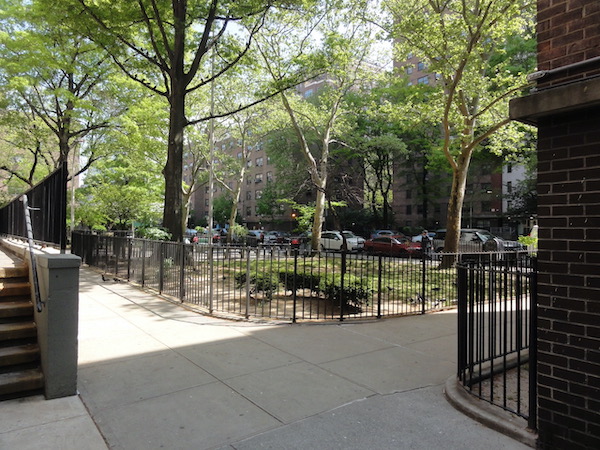
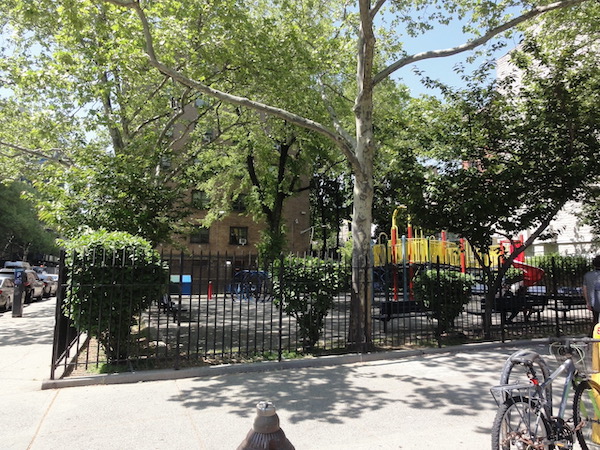
—Loss of Vital Carbon Absorption and Sunlight: The plan would remove 370 mature trees (most 60+ years old) and 7 acres of publicly accessible light filled open space that act as natural air and water filters. They would be replaced with 5 acres of privately controlled courtyards that would be completely shadowed by towers up to 40 stories tall. The adjacent 4-acre Chelsea Park, currently without shadows and used by countless sports leagues, would be placed in deep shadow year round. Nearby schools and playgrounds would also be shadowed.
—Construction Pollution: Residents and visitors alike would face 16 to 30 years of continuous demolition and construction dust, noise, and air pollution on land that would release buried toxic industrial chemicals.
 The Privatization of Public Land | The blueprint relies heavily on private developers, raising concerns about handing over public wealth with little public oversight.
—A Century-Long Lease: The plan would hand over 14 acres of public land, spread across six central Chelsea blocks, to private interests via a 99-year lease; effectively removing it from public control. Seventy percent of the land would be turned over to market and near-market rate households. The remaining 30% of land would be segregated for NYCHA residents, provided they meet new, stricter residency requirements.
—The Financial Breakdown: While the private developer would contribute about 5% of the funding for demolition and new construction, 95% of funding would come from public tax dollars. After construction is complete, the developer would receive market and near market rate rents for approximately 5,500 new homes, with your tax dollars subsidizing only about 2,000 of those homes for low- and moderate-income residents. The plan essentially becomes a huge windfall for the private developer and its investors. Ballooning cost estimates of demolition and new construction (currently at about $2.4 billion) has created a rushed justification for tearing everything down instead of returning to the more affordable and stable renovation option.
—A History of Broken Promises: Community advocates worry about the developer’s track record, pointing to the nearby Hudson Yards (another Related Companies project built on public land) where promised income-targeted housing still hasn’t been built. A separate failure of private development on public land is the Atlantic Yards/Pacific Place project in Brooklyn, where 25 years after initial demolition and new construction, thousands of promised income-targeted homes also haven’t materialized.
Bypassing Planning Laws and Local Wisdom | Urban planners and community groups argue the project flies in the face of established federal regulations and decades of local expertise.
—Federal and Local Rules: The proposal sidesteps HUD Section 18 requirements regarding genuine tenant engagement and the rule that demolition should only happen if buildings are truly beyond repair. A required Physical Needs Assessment was never published, leaving the public to rely on a developer’s private assessment as the reason for the proposed demolition. When asked, NYCHA has stated that the FEC buildings are structurally sound.
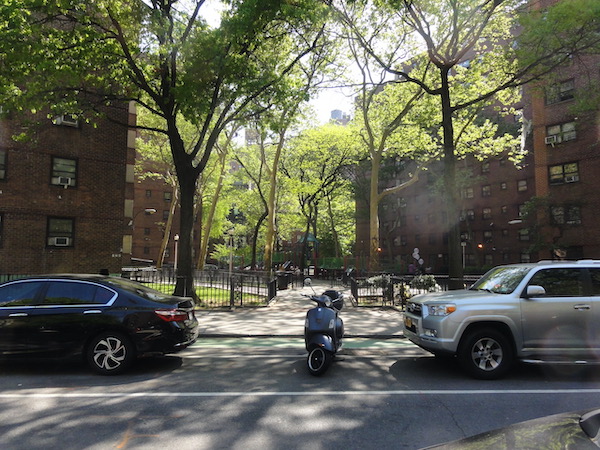
—Ignoring Neighborhood History: The plan ignores decades of community-crafted blueprints, such as the Chelsea 197-a Plan, the Chelsea NYCHA Working Group Report, PlaNYC, the NYC Urban Forest Agenda, and NYCHA’s own Urban Forest Plan. Instead of following Jane Jacobs’ proven urban planning principles—which emphasize preserving older buildings and creating small blocks (which currently exist with the spacing of buildings between mid-block passageways) — this project leans heavily into large-scale, top-down urban renewal schemes which history has shown never work out due to changing priorities and public funding cuts.
 A “Better Way”: The Proposed Alternatives | Opposition to the demolition is not simply about saying “no,” but about championing a different, more sustainable model that keeps residents in their homes. Key alternatives include:
—Alternative Funding Streams: Rather than relying on private developers, advocates suggest dedicated public funding models—such as a Millionaires Tax, Stock Transfer Tax, Hotel Room Tax, or other taxes similar to how the MTA secures funding to create a dedicated source of funding for NYCHA repairs.
—Renovation Over Demolition: By investing in the existing buildings and open space and establishing resident workforce training programs for maintenance and repairs, the city could fix the infrastructure while keeping the community intact.
—Protecting the Green Space: Proposals have suggested transferring the open spaces to trusted caretakers like the Trust for Public Lands, legally safeguarding the trees and open space from future development without requiring complicated parkland mapping.
Please contact Mayor Mamdani’s office to rectify this injustice and help create a new plan that respects dignity, environment and the legal rights of FEC residents and neighbors.
Thomas G. Lunke is an urban planner, Chelsea resident, and co-founder of the Chelsea Neighbors Coalition.
This above content was previously published here, and has been reprinted with the author’s permission. Note: The views expressed by our Guest Opinion writers are not necessarily those of Chelsea Community News.
—END—
No paywall. No pop-up ads. Why? Because we like you.
Launched on April 23, 2019, ChelseaCommunityNews.com (CCNews) is an independent online newspaper serving Manhattan’s Chelsea community and adjacent areas (Flatiron/NoMad & Meatpacking Districts, Hudson Yards, Hell’s Kitchen). Our free editorial content is made possible by advertising revenue, grants, quarterly pledges of support, and voluntary reader donations (click here to donate). To subscribe to our free ENewsletter, click here. ChelseaCommunityNews.com is a member of the New York Press Association (NYPA) and the Empire State Local News Coalition. Our work is collected for placement in the United States Library of Congress’ LGBTQ+ Studies Web Archive. Honors at NYPA’s annual Better Newspaper Contest, 2021-2025, include 3 wins for Coverage of the Arts, and 2 wins for Best News or Feature Series.
HELP SUPPORT US BY VISITING THIS WEBSITE TO READ OUR ARTICLES AND CLICK ON THE ADVERTISEMENTS.
Questions? Comments? Email Founder/Editor Scott Stiffler at scott@chelseacommunitynews.com.
You must be logged in to post a comment Login